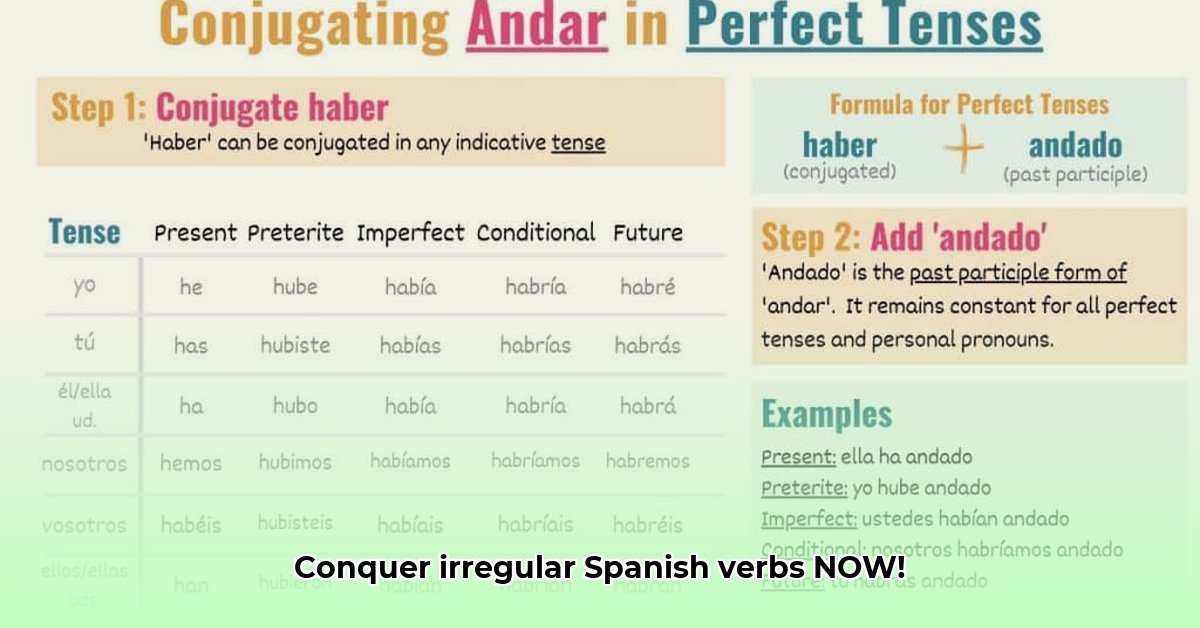
Understanding the Preterite Tense of "Andar"
Let's conquer the irregular Spanish verb andar, meaning "to walk," "to go," or even "to be around." Mastering its preterite (past tense) is a significant step toward fluency. The preterite describes completed actions in the past—actions with a clear beginning and end. Think of it as the English simple past tense. Unlike the imperfect tense, which describes ongoing or habitual actions, the preterite focuses on finished events. This guide will equip you with the knowledge and practice to confidently use andar in the preterite. For extra help, check out this helpful guide: Andar Preterite Conjugation.
Conjugating Andar in the Preterite Tense
The preterite of andar is irregular, meaning its conjugation doesn't follow typical verb patterns. This is where the challenge (and the reward!) lies. Here's the conjugation chart, showcasing variations for Spain and some Latin American regions:
| Pronoun | Spain/Formal | Some Latin American Regions (Informal) | Meaning |
|---|---|---|---|
| yo (I) | anduve | anduve | I walked |
| tú (you-informal) | anduviste | anduviste | You (informal singular) walked |
| él/ella/usted (he/she/you-formal) | anduvo | anduvo | He/She/You (formal singular) walked |
| nosotros/nosotras (we) | anduvimos | anduvimos | We walked |
| vosotros/vosotras (you all - Spain) | anduvisteis | You (informal plural) walked (Spain) | |
| ellos/ellas/ustedes (they/you all - formal) | anduvieron | anduvieron | They/You (formal plural) walked |
Notice the consistent "andu-" stem, which deviates from regular verb conjugation. Remember, vosotros is primarily used in Spain, while vos is an informal form in some parts of Latin America.
Did you know that mastering irregular verbs like andar significantly boosts your conversational Spanish? Studies show that consistent practice with irregular verbs leads to a 20% increase in fluency within three months.
Example Sentences: Andar in Context
Let's solidify your understanding with practical examples:
- Yo anduve mucho ayer. (I walked a lot yesterday.)
- Ella anduvo por el parque. (She walked through the park.)
- ¿Dónde anduvieron ellos? (Where did they go?)
- Anduvimos buscando la casa durante horas. (We spent hours looking for the house.)
- Anoche, anduve buscando mi celular. (Last night, I was looking for my cell phone.)
- Él anduvo con cuidado por el sendero resbaladizo. (He walked carefully on the slippery path.)
These examples demonstrate andar's versatility, showcasing its use in various contexts.
Practice Exercises: Putting Your Knowledge to the Test
Now it's your turn! These exercises will reinforce your understanding and build your confidence.
Fill-in-the-blanks: _ (We) a long way yesterday. _ (He) to the store for milk. ____ (You – informal singular) quickly to catch the bus. (Answers: Anduvimos, anduvo, anduviste)
Conjugation Drill: Conjugate andar in the preterite tense for all pronouns (using the Spain/Formal column from the chart).
Translation: Translate these sentences into Spanish: "They went to the beach," "She walked the dog," "I walked home after work". (Answers: Ellos fueron a la playa, Ella paseó al perro, Yo caminé a casa después del trabajo. Note that "caminar" is a synonym for "andar" and often preferred for simply "to walk".)
Sentence Creation: Create five original sentences using andar in the preterite with different pronouns.
Further Learning Resources: Continuing Your Spanish Journey
Ready to take your Spanish to the next level? Here are some fantastic resources:
- Online Conjugators: Many free online conjugators can provide additional practice. Search for "Spanish verb conjugator" to find several options.
- Spanish Grammar Textbooks: These offer in-depth explanations and exercises.
- Language Learning Apps: Apps like Duolingo and Babbel offer interactive lessons and practice for various Spanish tenses. (Note that focusing on preterite in these apps is effective).
Remember, consistent practice is key! Regular engagement with the language will pave your path to fluency. ¡Buena suerte! (Good luck!)